Stories Made Tangible: Veit Stoss Altarpiece in St. Mary’s Bas
Triptych Art in St. Mary’s Basilica (Poland)
The Veit Stoss altarpiece in St. Mary’s Basilica in Krakow is a national treasure of Poland and one of the reasons why the church in which it is housed is so famed. I’ve never been to Poland, let alone St. Mary’s Basilica, so I can only speculate on what it would be like to visit this place and gaze upon the polychrome masterpiece crowning the head of the aisle, gilded scenes from the New Testament looming 13 meters above my head with outspread wings. I’ve spent a long time wondering about this before, after all, when writing my final paper for my Northern Renaissance course in college (or uni, as we call it at home), which tackled the topic of how polyptych altarpieces enhanced the architecture of the church and the churchgoer’s spiritual experience in the space.
Then I lost the file, so what I originally planned to be an articulate and impactful conclusion to this blog, backed with painstaking university-level research and academic language, will now be reduced to a few measly paragraphs that is a shadow of the work I’ve done four years ago. Sob.
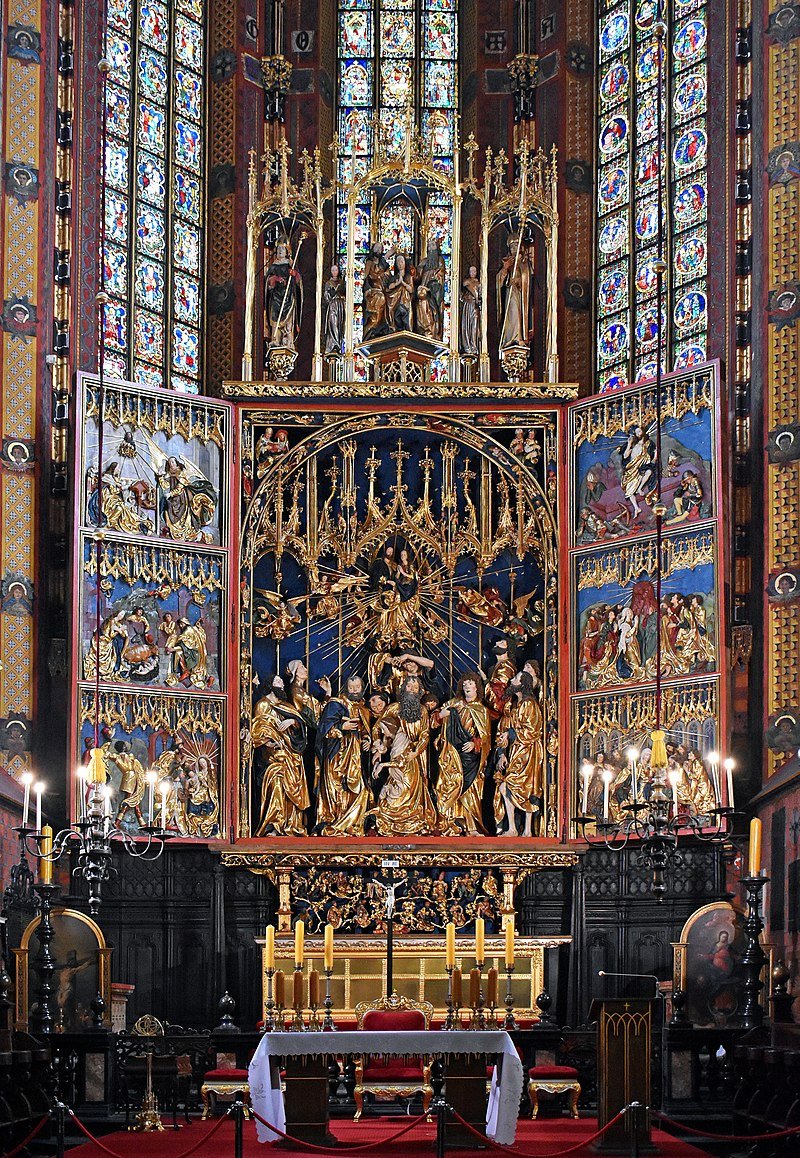
The Veit Stoss altarpiece in St. Mary’s Basilica, KrakowAs a student of illustration and a long-time fan of complex narrative art and opulent architecture, exploring the role of triptych art in Western history seemed like the perfect choice. In the interest of not annoying my professor and flunking her class, I did not mention in my paper how much triptychs reminded me of comic strips, just done in stone or wood and with protruding elements, but this thought should not come as a surprise to anyone, even those who did not study illustration or dream of writing graphic novels like I did. Polyptychs – triptychs with more than 3 panels – are sections of images arranged neatly within a plane, showcasing a series of events that are related to each other. Sounds like some good old-fashioned comics to me.
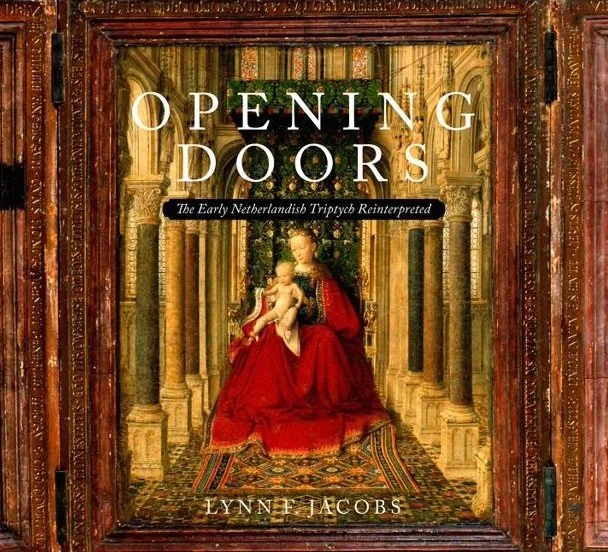
Reading Lynn F. Jacobs’ Opening Doors: The Early Netherlandish Triptych Reinterpreted, the text that provided me with a thesis statement even though I was using an Eastern European church and altarpiece as my main case study, I don’t think this comparison is so far-fetched. To be clear, Jacobs herself did not make this comparison, it’s just my personal take as an illustration major. In her book, she explains that the term “triptych” was never used during the period in question, but “painting with doors”, and the implications of this on our modern view of triptych art:
“The fundamental nature of the format created doors that established thresholds, boundaries, and interconnections between physical parts of the triptych—the center and wings, the interior and the exterior—and between types of meaning, the sacred and the earthly, different narrative moments, different spaces, different levels of status, and, ultimately, different worlds.”
Trippy!
With images formatted appropriately within this universe of established thresholds, boundaries, and interconnections, a multi-layered narrative emerges. On its own, triptychs or polyptychs are a treasure trove of narrative techniques, but in my paper I wanted to expand on the topic and its role in an architectural setting, as they are essentially works of microarchitecture due to their scale, proportion, and high degree of intricacy, and explore how this enhances one’s spiritual experience in the church. Not only do they visually match – colourful, luminous, luxurious and maximalist – but they function together operationally, with the doors of the triptych opening and closing according to the ritual or holiday being observed to show different pictures.
I’d elaborate, but like I said, I lost the damn paper. Hopefully, though, this taught you the symbiotic relationships that can exist between art and architecture, resulting in the appreciation of a meticulously designed and spiritually contemplative space.
More lists to come!